
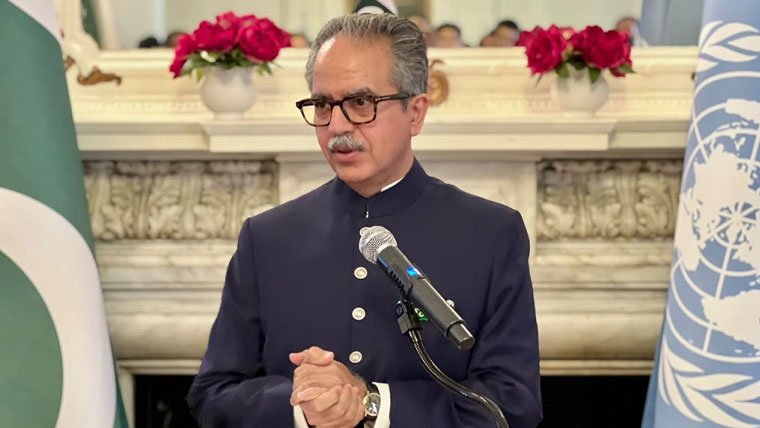
Taliban Regime Has Itself Become a Proxy Trying to Destabilize the Region: Asim Iftikhar
NEW YORK; The Permanent Representative of Pakistan to the United Nations, Asim Iftikhar Ahmad, has said that the Taliban administration has effectively become a proxy in Pakistan to destabilize the region as a whole, after a precipitous and ongoing rise in terrorist activities in Pakistan from Afghan soil.
Asim Iftikhar Ahmad pointed out in an interview with Arab News that new reports by the UN sanctions monitoring team and the UN Secretary General have stirred fresh anxiety about Afghanistan’s comeback as a haven for various militant groups in the region and across the globe.In 2025, the Pakistani envoy reports that the country experienced more than 5,200 terror-related incidents which caused more than 1,300 casualties, while in the first half of 2026, the country faced more than 3,000 attacks leaving more than 830 Pakistanis dead. According to data from Global Terrorism Index, there were 1,045 instances of terrorism and 1,139 deaths in Pakistan in 2025. Ambassador Ahmad said Tehreek-e-Taliban Pakistan (TTP), Balochistan Liberation Army (BLA), Majeed Brigade and Daesh’s regional affiliate are the biggest threats to Pakistan’s security.
He stressed that some of these groups were increasingly operating as fronts of the external hostile forces in the region. The Pakistani ambassador said it is not just the lack of capacity or political will of the Afghan Taliban and they have to be held accountable for not doing so. He claimed that the Taliban government is actively supporting them in various ways like giving them safe havens, advanced weapons left behind by the international military forces, financial aid, operational planning and support for infiltration from across borders. Ambassador Ahmad said the international community’s fundamental expectations after the Taliban seized power – inclusive government, respect for human rights, including women’s and girls’ rights, and non-use of Afghan soil for inciting terrorism against other countries – have been substantially undermined in the five years since the Taliban came to power, pointing to dire restrictions on female education and employment
.The envoy said Pakistan’s issue was not with Afghan citizens, but with the negative policies pursued by the Taliban and their networks and urged them to take tangible and verifiable steps to eliminate the sanctuaries of terrorist groups, such as the TTP, and interrupt their financial ties. He pointed out that countries such as Saudi Arabia, Turkiye, China, and Qatar have tried to facilitate, but the Taliban leadership has never been able to give assurances. Ambassador Ahmad was convinced that Afghanistan’s continued international isolation, freeze of assets and rejection of formal recognition can only be lifted if the Taliban government changes its policies, and adopts international standards of counterterrorism.