
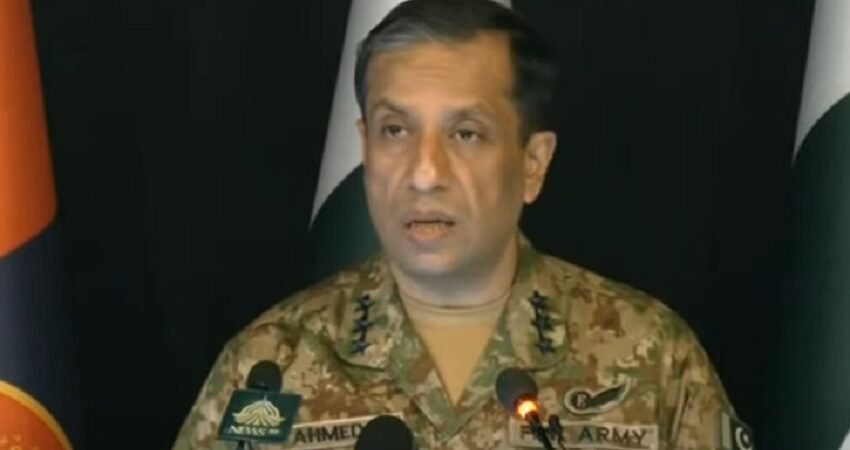
Facilitator Who Obstructed Counter-Terrorism Operations in Khyber Pakhtunkhwa Is No Longer Present, Declares DG ISPR Lieutenant General Ahmed Sharif Chaudhry; Stresses That No One in KP Opposes Anti-Terror Actions
RAWALPINDI: Director General Inter-Services Public Relations (ISPR) Lt. Gen Ahmed Sharif Chaudhry has said that Afghanistan is the main hub behind terrorism within Pakistan, but there are internal governance issues which need to be fixed and it seems the facilitator who had hampered the efforts against terror activities in KP has been removed from power.
The military spokesperson, in an interview with Reuters, expanded on Pakistan’s multiple-strike plan against terrorism, saying Pakistan has the “clearest experience” of any military in the world to combat terrorism and is carrying out about 200 intelligence-based operations (IBOs) every day in conjunction with police and intelligence agencies.
The key points of the interviews that DG ISPR Lieutenant General Ahmed Sharif Chaudhry gave to Reuters are as follows:
In that context, ignoring misconceptions, Lieutenant General Ahmed Sharif Chaudhry reiterated that none of the honorable people of KPW would have any objection to counter-terrorism operations. He said KP’s resilient people have been worst hit by the terror attacks and complimented Pashtuns as a key and proud segment of the Pakistani society. He made it clear that the facilitator who was obstructing security operations in the province was no longer there.
Balanced Assessment of Threats: The DG ISPR emphasized that the mindset which blamed all the internal problems on external factors must be abandoned and Afghanistan is a primary base where the leadership of the terrorists, training camps and infrastructure are in place while certain internal threats also need to be dealt with internally. He recalled that KP had long had to deal with a lacklustre, bureaucratic provincial system, yet continued security operations remain heavily dependent on intelligence gathered by IBOs rather than disruption.
The military spokesman disclosed the security nexus between Balochistan’s terrorist groups and the local elite who want to keep the Baloch population uneducated and poor, to sustain their influence in the province. He added that terrorists target infrastructure, bridges, railways, schools and teachers when they are called to do so by external masters in the name of warfare and sabotage of regional development.