
Pakistan Expresses Serious Concern Over India’s Growing Support for Terrorist Groups; Strategic Adviser Questions New Delhi’s Nuclear Policy and Cites Interference at IISS Workshop in London
LONDON : Pakistan has expressed serious concern against New Delhi’s alleged support of terrorist outfits in the country, and raised serious questions about its strategic and nuclear policies.
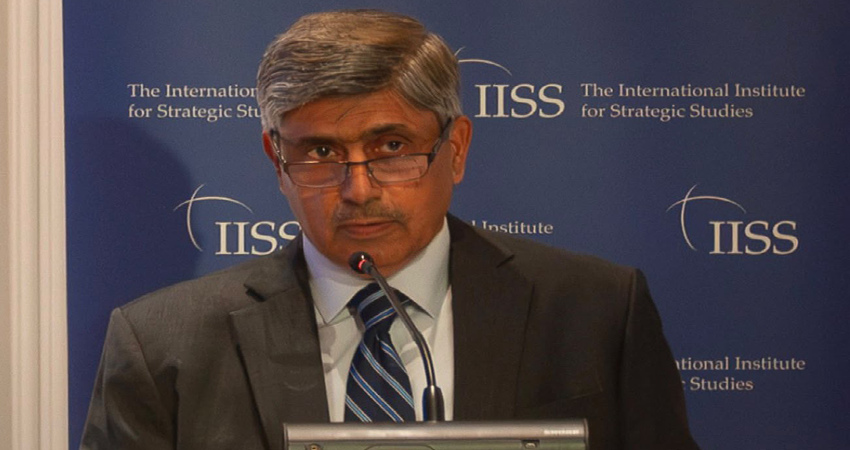
In the address, delivered at the 11th Track 1.5 Workshop on Nuclear Deterrence and Strategic Stability in South Asia organised by International Institute for Strategic Studies (IISS) in London, Lieutenant General (R) Mazhar Jamil Adviser to National Command Authority (NCA) and former Director General of the Strategic Plans Division (SPD) spoke about the prevailing security situation in South Asia, emphasising the need for effective crisis management mechanisms and continued bilateral dialogue to prevent further escalation.
Below are some highlights of the address by Lt Gen (R) Mazhar Jamil at IISS London:
TTP and BLA: In an interactive question and answer session, reacting to queries on external support given to the Tehrik-i-Taliban Pakistan (TTP) and Balochistan Liberation Army (BLA) being supplied via Afghanistan, Mazhar Jamil said India had stepped up its covert efforts in this regard.
He pointed out that Islamabad has shared its concerns with its international partners, including the United States and former International Security Assistance Force (ISAF) representatives in Afghanistan, and has concrete evidence of increasing Indian interference. The Indian consulates have always been used to help the terrorists through financial assistance and supply of weapons near the Pakistan border, he added.
In a critique of India’s Nuclear Policy, Jamil questioned India’s “No First Use” nuclear posture and suggested that the nuclear trade waivers it had received in 2008 should be reconsidered due to the resulting uncertainties for regional strategic stability.
Historical Precedents and Water Security: Using historical examples like the 1971 conflict and India’s previous ties with Sri Lanka’s LTTE, the nuclear adviser explained his stance on proxy dynamics in the region. He also condemned India’s decision to put the Indus Waters Treaty on hold after the tensions that erupted between the two nations after 2025, and stated that the bilateral defence talks between Pakistan and Saudi Arabia as well as Pakistan and Turkey are of a defensive nature.