
Emergency in Khyber Pakhtunkhwa Imposed Due to Internal Turmoil and Cross-Border Infiltration; All Political Parties Must Unite to Support Security Forces, Says Law Minister Azam Nazeer Tarar
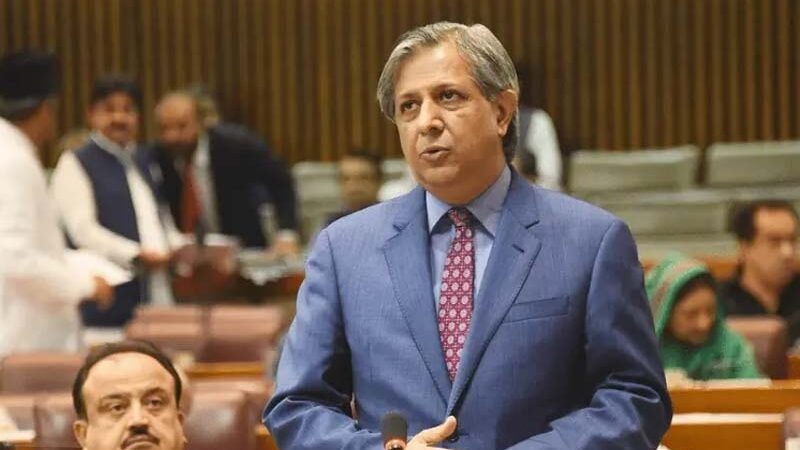
ISLAMABAD: The decision to impose emergency in KP was a tough one that was taken as a result of the mounting terrorist attacks, the law and order situation and the continuous infiltration from the Pakistani side, Federal Minister for Law and Justice Azam Nazeer Tarar has told the National Assembly.
In a speech to the lower house of the National Assembly, which was presided over by Speaker Ayaz Sadiq, Tarar said the federal cabinet had discussed the actual situation for two and a half hours before giving the president the green light to declare state of emergency, noting that the move was taken only when no cooperation could be mustered from the provincial leadership.
Every major point made by Law Minister Azam Nazeer Tarar in his address to the National Assembly was highlighted.
The law minister said that the Governor of Khyber Pakhtunkhwa had always expressed serious concern about “heavy incidents of terrorism” in several districts and had alleged that the provincial leadership was more interested in political agitations than in taking action against the terrorists. The governor had formally informed the president and the prime minister, he said, in official correspondence.
Failure in Security and Governance: Tarar criticized the previous provincial administration for failing to visit families in mourning, injured victims and coordinate with security institutions in the wake of deteriorating security, given how political rallies and travels to other cities take precedence over visits to these families.
Political Demands During National Crisis: Tarar pointed out that the opposition parties had raised demands for release of jailed leadership and prison privileges as a topic key to the negotiations to form a unified counter-terrorism strategy, highlighting that issues of judgment and constitutional pardens under Article 45 are not in conflict with the national security agenda.
Constitutional Framework: Tarar explained that the proclamation was made under article 232 and 234 of the Constitution to intervene if the constitutional machinery in a province was broken. He pointed out that the parliamentary procedures require that such declaration be presented to the National Assembly and the Senate within 10 days for formal approval, along with special administrative process set up for 12 districts most affected.