
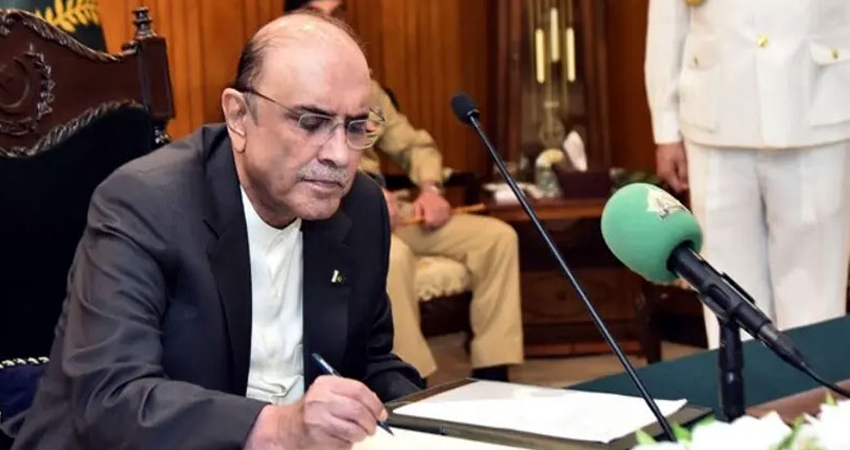
Emergency and Governor’s Rule Officially Imposed in Khyber Pakhtunkhwa; President Asif Ali Zardari Signs Summary as Governor Takes Charge as Province Administrator
ISLAMABAD: President Asif Ali Zardari signed the summary of the state of emergency, Governor’s Rule, in Khyber Pakhtunkhwa under Article 232 and 234 of the Constitution of Pakistan in a huge political and administrative shift.
The officials’ communique said the decision was made after an alarming increase in “terrorist activities, creation of anti-social atmosphere in the province and increased militant attacks on the government’s infrastructure, public infrastructure and law enforcement institutions were witnessed in the province.
Under the KP Emergency Proclamation and Federal Action the Governor assumes administrative control of the KP.
With the proclamation of emergency, KP Governor Faisal Karim Kundi will assume responsibilities as the provincial administrator. The governor can use all powers of the provincial government excluding the powers of the cabinet.
Abolition of Provincial Executive Offices: The Chief Minister, the provincial ministers, advisors, special assistants and advocate general are immediately deprived of their offices in view of the provisions of the presidential declaration. The provincial assembly is kept in existence but their legislative and executive function is suspended.
Earlier, Prime Minister Shehbaz Sharif had lambasted the provincial leadership for its threats to march on Islamabad and question the writ of the Federation in an emergency federal cabinet meeting, saying such threats were against the backdrop of serious security concerns.
He pointed out that provincial setup was unable to deliver or take a firm stance against terrorism despite having received more than Rs800 billion for counter-terrorism and building up the police and CTD forces in the province.Escalating Political Standoff:
The federal government claimed the provincial government was “no longer able to operate within the constitutional framework,” thus precipitating a strong reaction from political opposition leaders, who will have their own answers ready for the next parliamentary sessions.