
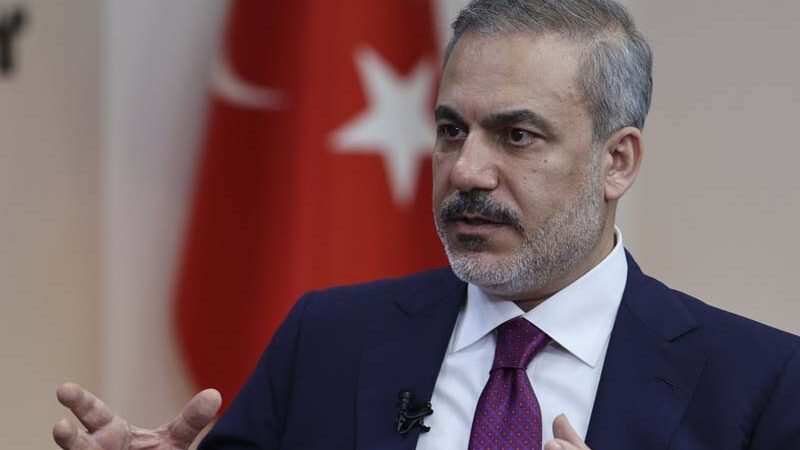
Turkish Foreign Minister Hakan Fidan Delivers Strong Rebuttal to Critics of Makkah Defense Pact, Defends Regional Security Framework
NEW YORK: Turkish Foreign Minister Hakan Fidan has responded to critics with vigour and decisiveness who have sought to question the chances of the new Makkah Joint Defense Agreement between Saudi Arabia, Pakistan and Türkiye being effective and legitimate.Turkish Foreign Minister Hakan Fidan has retorted to those who raised questions regarding the validity and effectiveness of the newly inked Makkah Joint Defense Agreement between Saudi Arabia, Pakistan and Türkiye with vigour and decisiveness.
The Turkish Foreign Minister, during a high-profile policy seminar in New York, took a strong stance against the skeptics in the region and asserted that “the trilateral defense pact is a significant anchor for regional peace and stability.
Acknowledging the letter of Former US. Ambassador James Jeffrey
To Western military alliances, Minister Fidan strongly backed the accord, giving pointed answers to the questions asked to her by former US Ambassador James Jeffrey on the subject of the accord’s practical efficacy.
NATO’s collective defense, Article 5, has never been formally invoked and applied throughout its history, according to Fidan, who asked the critics how many times they could count that.
Defending Institutional Legitimacy: Noting that Article 5 has been called on just once over the decades of NATO’s operations, without anyone questioning that the alliance is a “paper tiger”, Fidan argued its right to be called a “paper tiger” was unjust and inappropriate because critics expect a new defense pact to solve complex, decade-old conflicts like Yemen’s.
Reiterating the spirit of brotherhood and unity of Ankara, Riyadh and Islamabad, Fidan stated that regional security mechanisms are not quick fixes to solve residual geopolitical issues but are for long-term strategic deterrence and security.