
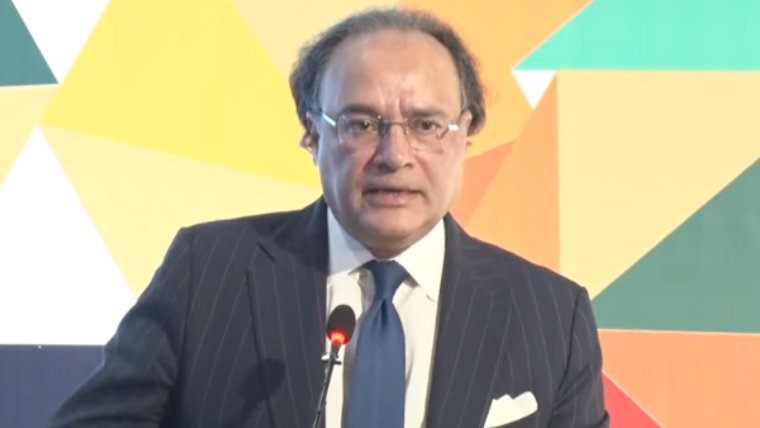
Pakistan Will Not Be Allowed to Return to Economic Boom-and-Bust Cycles: Finance Minister
ISLAMABAD: Federal Minister for Finance and Revenue, Muhammad Aurangzeb has announced that the federal government will not allow Pakistan’s economy to fall back into the historical cycle of boom and bust.
In addressing an event in Islamabad, Finance Minister Muhammad Aurangzeb highlighted the need for mobilising private capital as it is essential for economic growth and investment can be effectively expanded by mobilising private capital through Public Private Partnerships (PPPs) and privatisation.
The government’s policy to ensure sustainable macroeconomic stability is firmly on structural reform, he added. The Finance Minister said that transparency, efficiency and investor confidence would be the top priority in the privatization process. He emphasized the importance of private sector investment in infrastructure and public service delivery through PPPs as an important mechanism for advancing the private sector.
Outlining the need for more effective synergy, Aurangzeb pointed out the importance of a closer linkage between the government and the private sector for economic development. He stressed that the process of macroeconomic stability had been achieved by “painful policy decisions” and that it must now be maintained as a constant. The Finance Minister highlighted the key fiscal and external indicators, saying the overall deficit has been reduced significantly and the collection of tax by Federal Board of Revenue (FBR) has experienced a phenomenal growth.
He said FBR’s revenue has increased by 40% during the last two years, which has raised the tax-to-GDP ratio from 8.8% to 10.3%. In addition, Aurangzeb said that IT services exports were valued at $4.6 billion in the previous fiscal year, with freights of the same amount being $1.6 billion, but still more efforts were needed on merchandise exports, which were valued at around $30 billion.
He noted that far-reaching changes in the energy sector, state-owned enterprises (SOEs), tax and privatization are taking place with steady progress.